
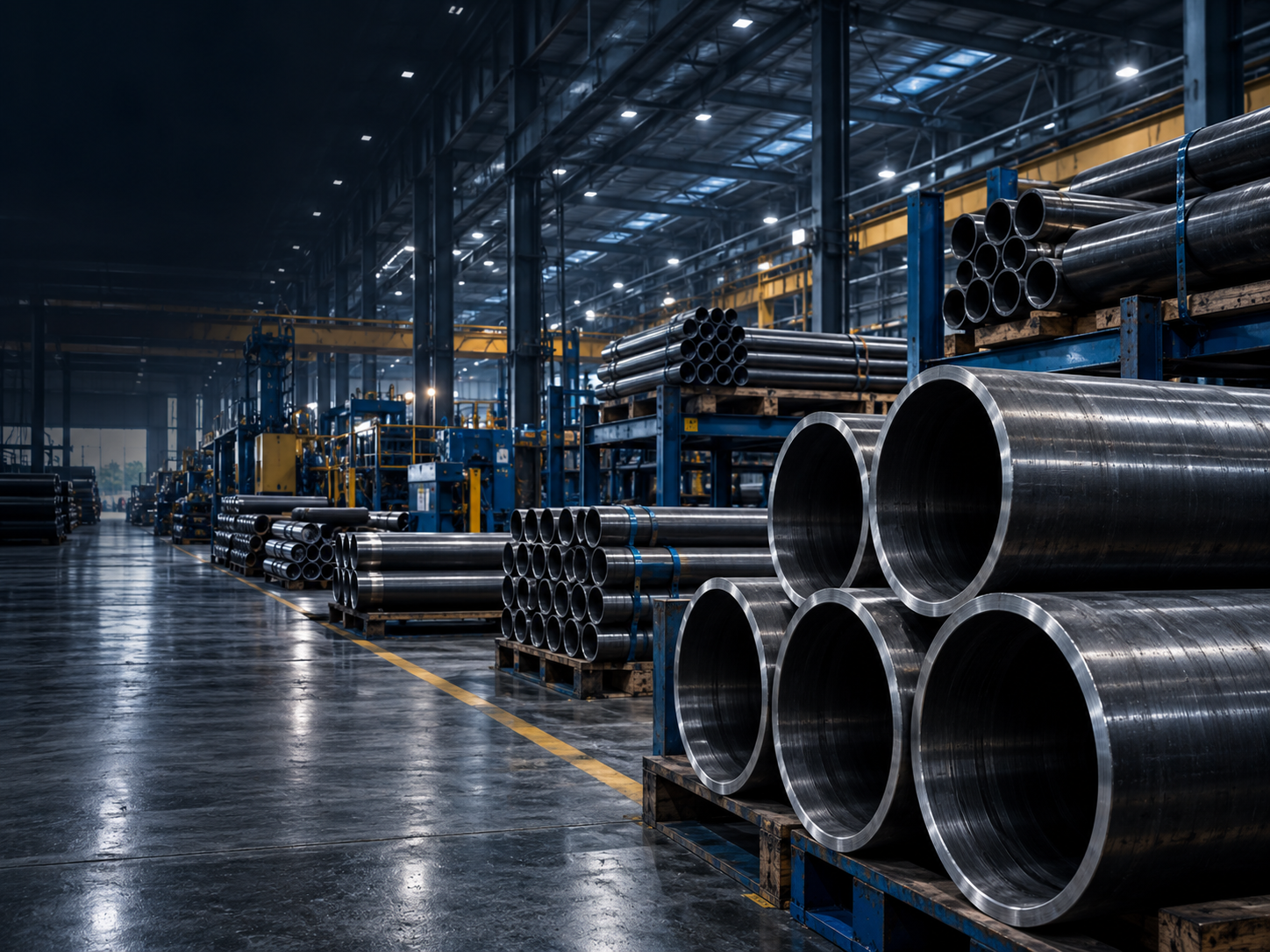
Steel Pipes for Industrial Requirements.
Steel pipes are sourced around the requirement behind the application — including the relevant specification, quantity and delivery requirement.
Ferrynoxis supplies steel pipes and industrial machinery for manufacturing, engineering, fabrication and other industrial requirements — with products selected around application, specification and quantity.
Different industrial environments create different sourcing requirements. Ferrynoxis approaches them around the application, the specification and the quantity required.
Multiple operating environments, connected through practical product requirements.
Steel and metal environments can involve demanding material, equipment and process requirements. Ferrynoxis approaches these requirements through the products needed for the application.
Engineering and fabrication environments often begin with a defined material, equipment or application requirement. Ferrynoxis structures sourcing around that requirement.
Production environments can require a combination of industrial materials and equipment. Product selection starts from the operational requirement rather than a generic catalogue.
Construction and infrastructure projects can involve specific material and machinery requirements at different stages. Ferrynoxis keeps the sourcing process tied to the project need.
Industrial sourcing starts with understanding what the requirement is asking for. Ferrynoxis connects product categories with the application, specification and quantity before moving toward a quote.
Steel pipes are sourced around the requirement behind the application — including the relevant specification, quantity and delivery requirement.
Machinery requirements can vary with the application, operating environment and project scope. Ferrynoxis approaches equipment sourcing around those requirements.
The product category may stay the same while the requirement around it changes. Ferrynoxis structures industrial sourcing around the application, specification, quantity and delivery context behind the request.
Product selection begins with understanding what the application actually needs.
The industrial environment and intended use help define what the requirement actually demands.
Relevant product specifications are identified before the sourcing discussion moves toward a quote.
Quantity helps frame the sourcing requirement and keeps the quote discussion tied to the actual need.
Delivery location and project context help complete the requirement before the sourcing conversation.
Ferrynoxis is building its technology direction around the industries it serves. Real requirements create real understanding — and that understanding informs what comes next.
Work with real industrial requirements through products and equipment.
Observe requirements, workflows and recurring industrial problems.
Translate identified problems into technology and AI development paths.
Test developing technologies in relevant industrial environments and improve them.
The goal isn't to add technology for its own sake. It is to build technology around problems that actually exist in the industries Ferrynoxis understands.
Industrial buying is rarely a one-click decision. Ferrynoxis keeps the process connected to the actual requirement — from product discovery to a direct sourcing conversation.
Tell us what you need, where it will be used and what the application requires.
Review the relevant steel pipe or industrial machinery category for your requirement.
Share the specification, quantity, delivery location and any additional requirement.
Submit the requirement so the Ferrynoxis team can review the request and respond.
Continue the conversation around sourcing, availability and the specific requirement.
Every requirement does not need the same sourcing path. The process stays flexible around the product, specification and project context.
Tell Ferrynoxis what you are looking for — from steel pipes and industrial machinery to a requirement that needs a deeper sourcing discussion.
Tell us what you need and our team will get back to you.
Tell us about the industrial problem you're looking to solve, what you want to monitor or detect, and where you see an opportunity for intelligent automation.